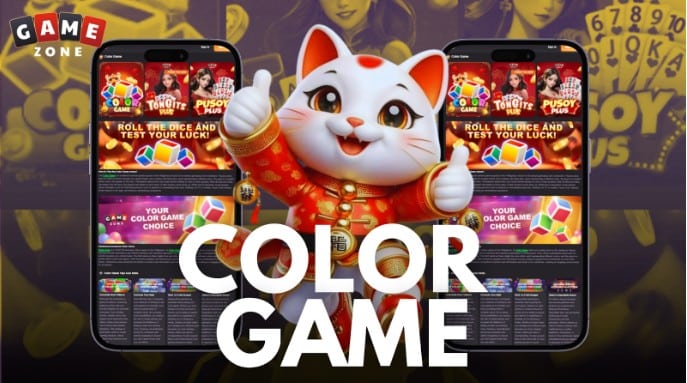
On paper, Color Game live perya is almost too simple to be this entertaining. You choose a color, the dice roll, and you either win or quietly convince yourself you were “this close.” That’s the entire game.
And yet, it works. People gather around, watch every roll as it matters, and somehow get emotionally invested in colored squares. The reason is not complexity. It’s the colors themselves.
Bright, bold, and impossible to ignore, colors transform a basic dice game into something that feels dynamic and exciting.
Whether you’re in a crowded perya or playing on your phone, those colors are doing more than decorating the table. They’re quietly influencing how you think and what you choose.
How Color Game Works (Without Overthinking It)
The mechanics of Color Game are refreshingly straightforward. Three dice, each marked with a different color, are rolled every round. Before the roll, players place bets on one color, hoping it appears on at least one die.
If your chosen color shows up once, you win a small payout. Two matches increase the reward, and three matches deliver the biggest return. That’s the entire system.
There’s no hidden formula or advanced strategy buried somewhere in the rules. Each round is independent, and every color has the same odds. The simplicity is exactly what makes the game accessible but also what leaves room for your brain to start inventing patterns that don’t exist.
Why Colors Make the Game Feel Alive
Try imagining Color Game without color. Replace everything with gray tiles and neutral dice, and suddenly the excitement disappears. The game would still function, but it would feel empty.
Colors give the game its energy. They pull your attention, trigger emotional responses, and make each decision feel more significant than it actually is.
That’s why perya booths are always bright and visually loud. The goal is not subtlety. The goal is engagement.
In both physical and digital setups, color keeps your eyes moving and your mind involved. It turns a simple outcome into something that feels dramatic.
The Psychology Behind Your Choices
Most players like to think they’re choosing colors randomly. That’s a nice idea, but it’s not entirely true.
Color psychology explains why certain colors naturally stand out or feel more appealing. Emotional associations, cultural meanings, and visual dominance all play a role in shaping your decisions.
Even in a game driven by chance, your brain is constantly reacting to these cues. You’re not just picking a color. You’re responding to how that color makes you feel, whether you realize it or not.
Red: The Color That Demands Attention
Red doesn’t ask for attention. It takes it.
It’s associated with excitement, urgency, and celebration, which makes it incredibly effective in a fast-paced game like Color Game live perya. Many players gravitate toward red because it feels active and rewarding, even before the dice are rolled.
This doesn’t change the outcome, of course. Red has the same probability as every other color. But it creates a sense of intensity that makes the game more engaging.
When players pick red, they’re often responding to that energy rather than making a calculated choice.
Blue: The Comfort Pick
If red is all about excitement, blue is the opposite. It feels calm, steady, and reliable. Players who choose blue often feel like they’re making a more controlled decision, even if the odds say otherwise.
Something is reassuring about sticking with blue. It creates a sense of consistency, which can be helpful in keeping emotions in check. At the same time, it can lead to repetitive habits that feel strategic but aren’t actually influencing results.
Blue doesn’t make the game safer. It just makes it feel that way, which is sometimes enough for players to keep choosing it.
Yellow: The One You Notice First
Yellow is impossible to ignore. It’s bright, energetic, and designed to stand out in any environment.
In a busy perya setting or a colorful app interface, yellow often becomes the first thing players notice. That visibility can lead to quick decisions, sometimes without much thought behind them.
It creates a sense of optimism, the feeling that something good might happen if you just go with it. Of course, that feeling has no impact on the outcome, but it does make the experience more exciting.
Lucky Colors and Personal Beliefs
At some point, Color Game stops being just a game and becomes something more personal.
Players start associating certain colors with luck. Red might represent prosperity, green might symbolize money or growth, and white might feel balanced or neutral. These beliefs often come from cultural traditions or personal experiences.
Once a player wins using a specific color, that choice can turn into a habit. They return to it again and again, convinced it holds some advantage. The dice, naturally, remain indifferent.
Still, these beliefs add another layer of enjoyment. They give players a sense of control, even in a game where outcomes are completely random.
Online Color Game: Same Energy, Better Visuals
The shift from perya booths to online platforms didn’t change how the game works, but it definitely changed how it looks.
Digital versions enhance everything. Colors are brighter, animations are smoother, and layouts are designed to guide your attention. The experience becomes more polished, but the psychological effects stay the same.
Certain colors still stand out more than others. Your eyes still move toward the brightest or most central options. The difference is that now, it’s all happening on a screen instead of under carnival lights.
The game may have gone digital, but your reactions to color haven’t changed at all.
The Pattern Illusion That Keeps You Guessing
Eventually, most players start looking for patterns. It’s almost unavoidable.
You watch a few rounds and think maybe red is overdue, or blue is on a streak, or yellow is about to make a comeback. It feels logical in the moment, like you’re figuring something out.
In reality, each roll is independent. There is no memory in the system, no hidden cycle waiting to be cracked. What you’re experiencing is your brain trying to create order out of randomness.
It doesn’t make the game less fun. If anything, it adds to the excitement. Just don’t confuse that feeling with an actual strategy.
Why Every Round Still Feels Fresh
Even though the rules never change, Color Game rarely feels repetitive. That’s because colors keep shifting your perception.
One round might feel intense because of bold color choices. The next might feel calmer depending on what you focus on. Your confidence, your mood, and your decisions all fluctuate based on what you see.
Without color, the game would lose that variety. With it, every round feels slightly different, even if the mechanics stay the same.
From Perya Nights to Everyday Play
There’s a certain charm to playing Color Game at a live perya. The sounds, the lights, and the crowd all contribute to the experience.
Online platforms try to recreate that atmosphere while making the game more accessible. You can play anytime, without waiting for a local event, and still enjoy the same colorful setup.
The environment may change, but the core appeal stays intact. Colors continue to guide your attention and shape your decisions, no matter where you play.
Final Thoughts: It’s the Colors That Make It Stick
Color Game live perya succeeds because it’s simple, but it stays memorable because it’s engaging.
Colors are at the center of that experience. They add excitement, influence choices, and create emotional connections that go beyond the basic mechanics of the game.
Even though every color has equal odds, they don’t feel equal. That difference between reality and perception is what makes the game so interesting.
In the end, you’re not just betting on a color. You’re reacting to it, interpreting it, and sometimes trusting it a little more than logic would suggest. And that’s exactly why it keeps people coming back.
Frequently Asked Questions (FAQs)
What is Color Game live perya?
Color Game live perya is a traditional Filipino carnival game where players bet on colored spaces while dice with matching colors are rolled. Winnings depend on how many matches appear.
Can you play Color Game online?
Yes, online platforms now offer digital versions of Color Game that replicate the traditional setup while adding more vibrant visuals and accessibility.
Do colors affect your chances of winning?
No. All colors have equal probability. The influence of color comes from psychology and personal preference, not from any difference in the game’s mechanics.